AI Interferences in Business 2027: What the Evidence Actually Supports
AI Interferences in Business 2027: What the Evidence Actually Supports
Date and Scope
Date: 2026-06-05
Scope: This report assesses what the supplied sources do—and do not—support about “AI interferences in business” with a 2027 lens. The evidence base here is strongest on enterprise AI adoption, productivity effects, and formal AI risk management, and weaker on direct measures of business disruption, compliance failure, fraud, security incidents, or 2027 forecasting. The report relies only on the provided sources: OpenAI’s enterprise AI report (Source 1), NIST’s AI Risk Management Framework (Source 2), the NBER working paper Generative AI at Work (Source 3), and an IBM Canada newsroom item on shadow AI (Source 4).
Executive Summary
The clearest conclusion from the available evidence is that AI is already reshaping business operations in measurable ways, but the sources do not directly quantify “interference” in the sense of business disruption, losses, or 2027 scenario risk. OpenAI reports deepening enterprise use, large-scale customer penetration, and widening performance gaps between frontier and median adopters as of 2025-12-17 (Source 1, https://openai.com/business/guides-and-resources/the-state-of-enterprise-ai-2025-report/?utm_source=openai). NBER finds a 14% productivity lift from generative AI in a real customer-support setting, with especially large gains for novice workers (Source 3, https://www.nber.org/papers/w31161?utm_source=openai). NIST frames AI as an organizational risk-management issue spanning individuals, organizations, society, and critical infrastructure, and it explicitly notes that generative AI needs tailored controls (Source 2, https://www.nist.gov/itl/ai-risk-management-framework?utm_source=openai).
The report therefore supports a practical 2027 business outlook: AI is likely to be embedded more deeply in workflows, and firms that lag in adoption or governance may experience competitive and operational disadvantage. What remains unverified in the supplied material is the magnitude of downside interference—such as compliance breaches, shadow AI exposure, downtime, or fraud—especially at a 2027 horizon (Source 4, https://canada.newsroom.ibm.com/2025-09-03-IBM-R-Study-Shadow-AI-Use-Surges-as-Canadian-Workers-Outpace-Employers-in-AI-Adoption?asPDF=1&utm_source=openai).
Key Findings
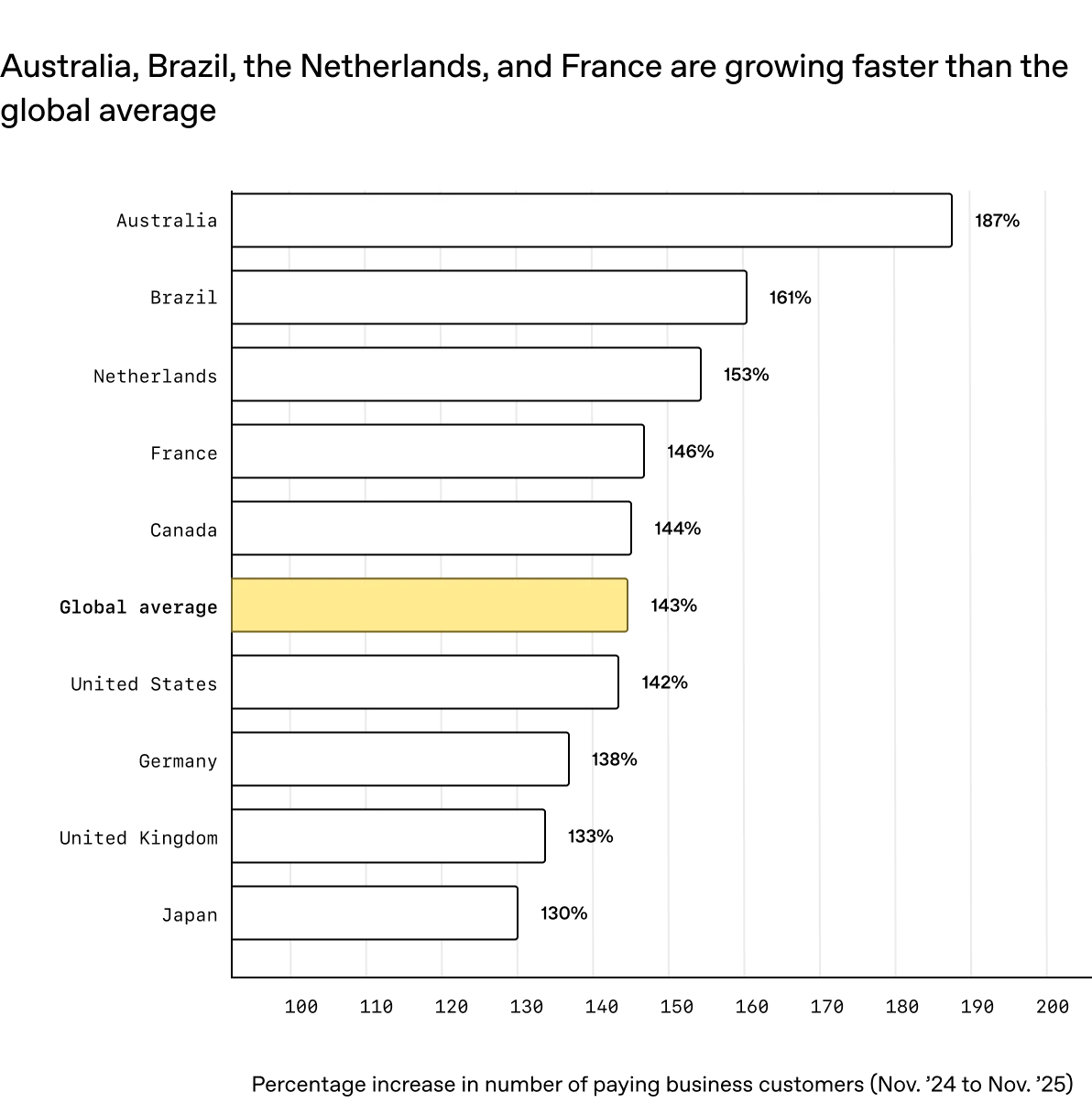
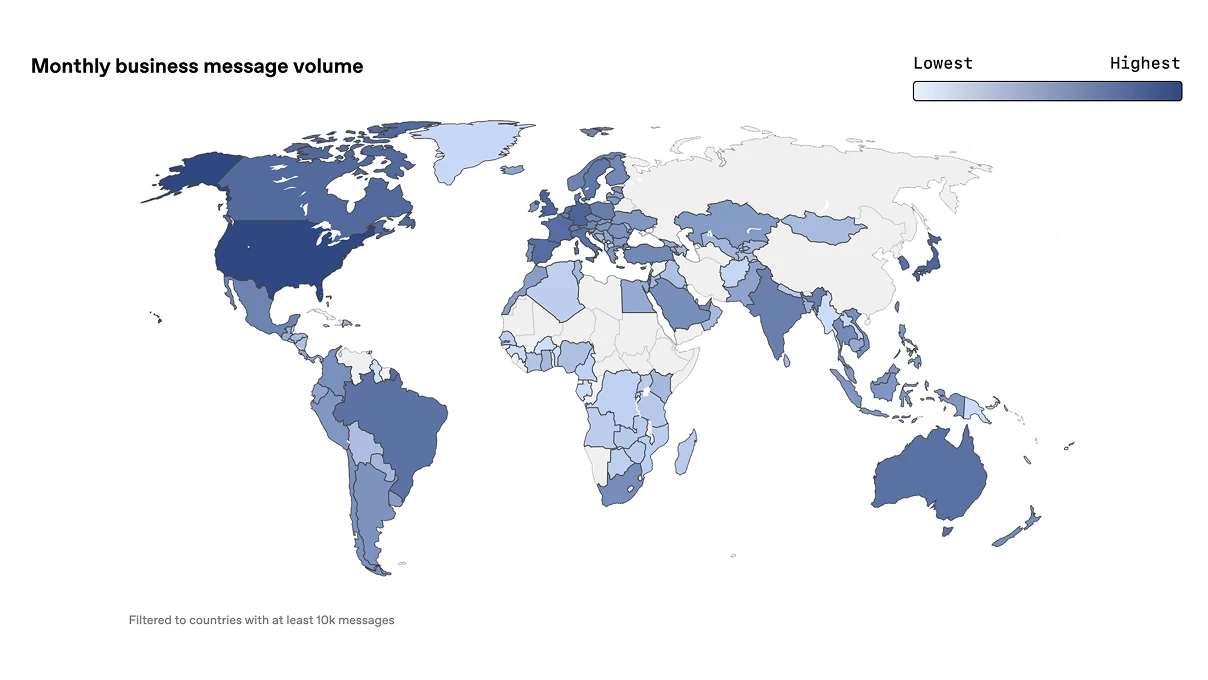
Enterprise AI adoption is moving from pilot to scaled deployment. OpenAI says more than 1 million business customers use its tools and more than 7 million ChatGPT workplace seats are active, with Enterprise seats up about 9x year-over-year as of 2025-12-17 (Source 1, https://openai.com/business/guides-and-resources/the-state-of-enterprise-ai-2025-report/?utm_source=openai).
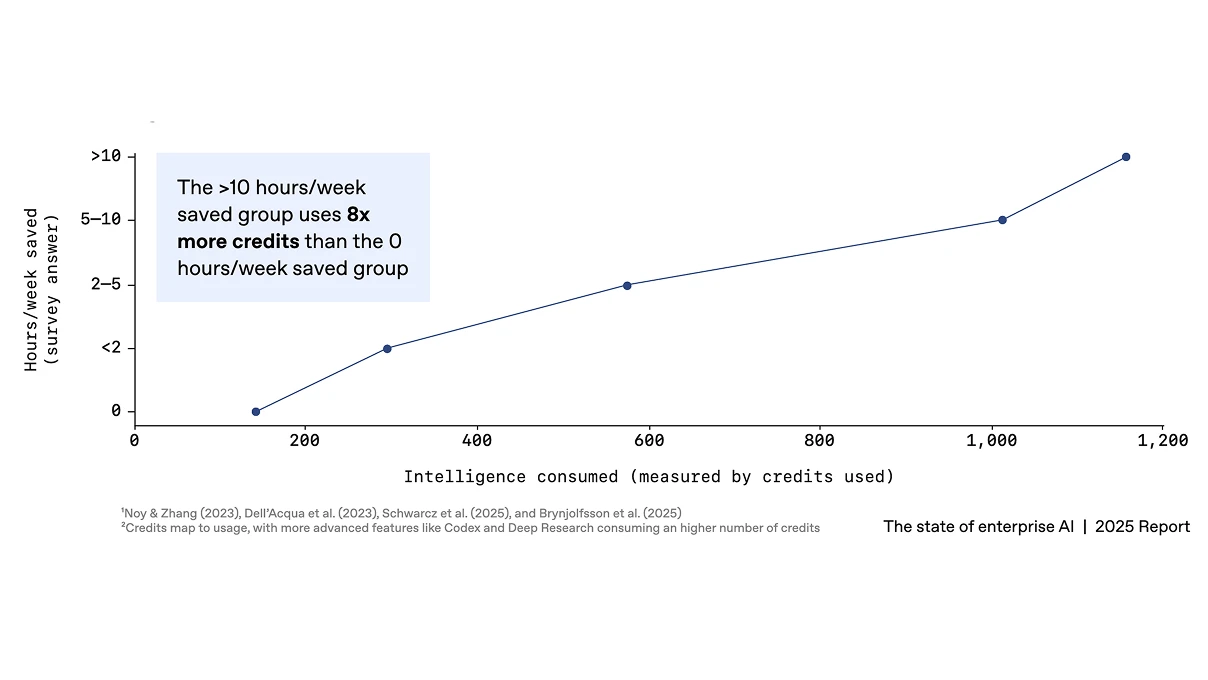
Productivity gains are real and measurable. In NBER’s customer-support study, access to a conversational AI assistant increased issues resolved per hour by 14% on average; novice and low-skilled workers saw a 34% improvement (Source 3, https://www.nber.org/papers/w31161?utm_source=openai).
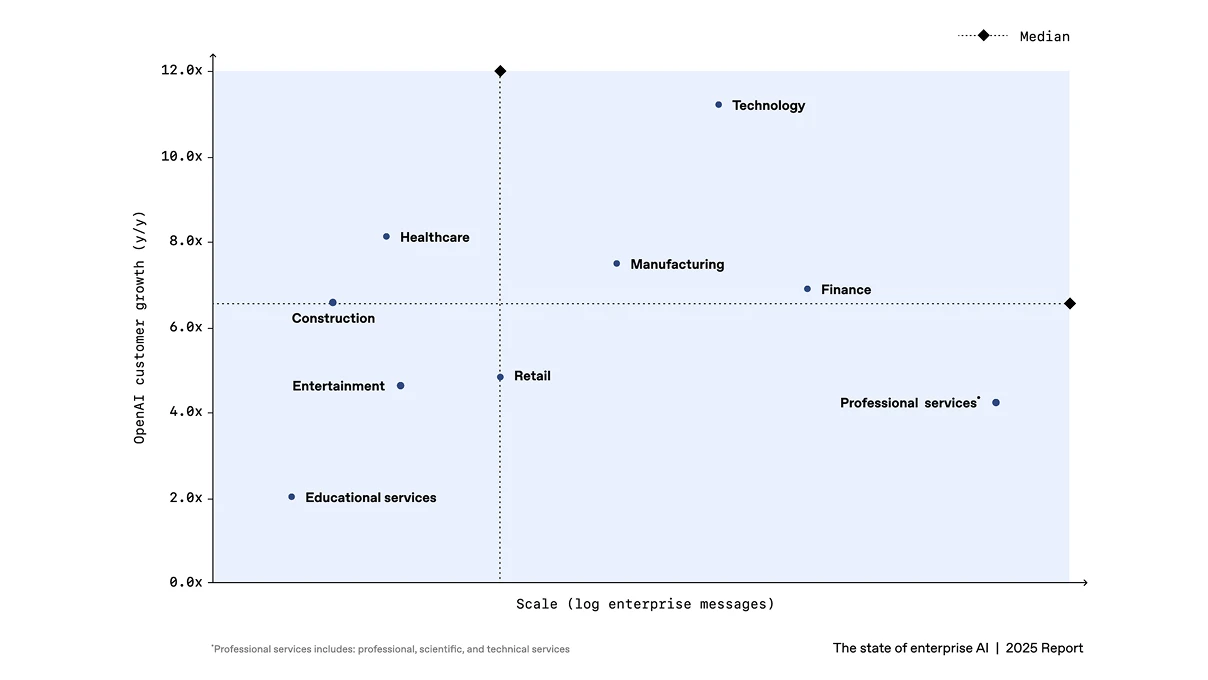
AI benefits are unevenly distributed. OpenAI reports a widening frontier-versus-median gap, including frontier workers sending 6x more messages and frontier firms sending 2x as many messages per seat as the median enterprise (Source 1, https://openai.com/business/guides-and-resources/the-state-of-enterprise-ai-2025-report/?utm_source=openai).
AI risk management is now a formal governance priority. NIST’s AI RMF is voluntary but explicitly designed to help manage risks to individuals, organizations, and society, and NIST released a Generative AI Profile to identify unique generative-AI risks (Source 2, https://www.nist.gov/itl/ai-risk-management-framework?utm_source=openai).
Evidence on “interference” remains indirect. None of the sources directly quantify AI-caused downtime, legal exposure, security incidents, labor displacement, or other 2027 business disruption scenarios; those issues remain unverified from the provided material (Source 1, Source 2, Source 3, Source 4).
Detailed Findings
1) AI is scaling inside firms, not staying experimental
OpenAI’s report describes enterprise AI as entering a phase where “many of the world’s largest and most complex organizations are starting to use AI as core infrastructure” (Source 1, https://openai.com/business/guides-and-resources/the-state-of-enterprise-ai-2025-report/?utm_source=openai). It also states that ChatGPT message volume grew 8x and API reasoning token consumption per organization increased 320x year-over-year, indicating deeper operational usage rather than one-off trials (Source 1, https://openai.com/business/guides-and-resources/the-state-of-enterprise-ai-2025-report/?utm_source=openai).
That matters for business interference because systems that become core infrastructure can also become core points of dependency. The provided sources do not prove disruption, but they do show that AI is becoming embedded enough that failures, misuses, or governance gaps would have meaningful business consequences if they occur (Source 1, Source 2).
2) Productivity gains are strongest for less experienced workers
The NBER working paper Generative AI at Work studied 5,179 customer support agents and found a 14% increase in productivity as measured by issues resolved per hour after access to a conversational AI assistant (Source 3, https://www.nber.org/papers/w31161?utm_source=openai). The gains were much larger for novice and low-skilled workers—34%—while the effect on experienced workers was minimal (Source 3, https://www.nber.org/papers/w31161?utm_source=openai).
This pattern is important for 2027 business planning because it suggests AI may compress skill gaps in some functions while widening performance separation at the firm level. If frontier organizations deploy AI more effectively, they may outpace slower adopters in throughput, service quality, and learning velocity (Source 1, Source 3).
3) Risk governance is becoming institutionalized
NIST’s AI Risk Management Framework is explicitly intended to help manage AI risks to individuals, organizations, and society, and it is “intended for voluntary use” across the AI lifecycle (Source 2, https://www.nist.gov/itl/ai-risk-management-framework?utm_source=openai). NIST also released a Generative AI Profile on 2024-07-26 to help organizations identify unique generative-AI risks, and on 2026-04-07 it released a concept note for a profile focused on trustworthy AI in critical infrastructure (Source 2, https://www.nist.gov/itl/ai-risk-management-framework?utm_source=openai).
This is the strongest evidence in the set that “AI interference” is not just a technical concern. It is a governance problem with possible implications for regulation, public trust, operational resilience, and critical infrastructure (Source 2).
4) Shadow AI is flagged, but the supplied evidence is not readable enough to verify
The IBM Canada newsroom item is titled as a study on “Shadow AI” use surging among Canadian workers (Source 4, https://canada.newsroom.ibm.com/2025-09-03-IBM-R-Study-Shadow-AI-Use-Surges-as-Canadian-Workers-Outpace-Employers-in-AI-Adoption?asPDF=1&utm_source=openai). However, the provided fetch is largely unreadable PDF data, so the actual findings cannot be verified from the supplied text. As a result, the source only supports the existence of a 2025-09-03 IBM newsroom study on shadow AI; its substantive claims remain unverified here (Source 4, https://canada.newsroom.ibm.com/2025-09-03-IBM-R-Study-Shadow-AI-Use-Surges-as-Canadian-Workers-Outpace-Employers-in-AI-Adoption?asPDF=1&utm_source=openai).
Source Analysis (Official vs. Secondary)
Official / primary sources
- OpenAI enterprise report: vendor-generated primary evidence on enterprise adoption and usage patterns (Source 1).
- NIST AI RMF: government guidance on AI risk management and governance (Source 2).
- NBER working paper: academic primary evidence from a real workplace deployment study (Source 3).
Secondary / weaker-verifiability source
- IBM Canada newsroom PDF: potentially useful secondary/industry evidence on shadow AI, but the provided text is not reliably readable, so its conclusions are not verifiable from this fetch (Source 4).
Overall, the official and academic sources are stronger and more usable than the IBM newsroom item for this question (Source 1, Source 2, Source 3, Source 4).
Comparison / Synthesis
Across the sources, the pattern is consistent: AI is creating real business value, but governance complexity is rising alongside adoption. OpenAI and NBER both support the claim that generative AI improves productivity in business workflows, with especially strong effects for less experienced workers and frontier adopters (Source 1, Source 3). NIST complements that by treating AI as a risk-management domain requiring controls across the AI lifecycle, including special treatment for generative AI and critical infrastructure (Source 2).
The synthesis for 2027 is therefore not “AI will inevitably disrupt business” but rather “AI will increasingly become embedded business infrastructure, and disruption risk will depend heavily on governance maturity and adoption quality.” The gap between frontier and median adopters suggests that uneven implementation may become a competitive interference factor even if direct losses are not yet quantified (Source 1, Source 2, Source 3).
Practical Implications
- Firms should treat AI adoption and AI governance as linked priorities, not separate projects (Source 2).
- Customer support, operations, and other workflow-heavy functions are likely to see the clearest productivity effects first (Source 3).
- Less experienced employees may benefit disproportionately from AI assistance, which can change training, supervision, and quality-control needs (Source 3).
- Firms that lag in adoption may lose relative performance as frontier firms increase throughput and usage intensity (Source 1).
- Shadow AI remains a plausible governance concern, but the supplied evidence does not verify its scale or business impact (Source 4).
Recommendations
Build AI governance into operating models now. Use a risk framework aligned with NIST’s AI RMF rather than relying on ad hoc approvals (Source 2, https://www.nist.gov/itl/ai-risk-management-framework?utm_source=openai).
Prioritize use cases with measurable workflow impact. Customer support, knowledge work, and internal service operations are supported by direct productivity evidence (Source 3, https://www.nber.org/papers/w31161?utm_source=openai).
Track adoption quality, not just adoption count. OpenAI’s frontier-versus-median gap suggests usage intensity matters; firms should monitor whether AI is actually embedded in high-value workflows (Source 1, https://openai.com/business/guides-and-resources/the-state-of-enterprise-ai-2025-report/?utm_source=openai).
Separate verified risk from speculation. Do not assume quantified business interference without evidence; the current sources do not establish 2027 loss estimates, incident rates, or sector-specific disruption forecasts (Source 1, Source 2, Source 3, Source 4).
Treat shadow AI as a hypothesis requiring local validation. The IBM item suggests the topic is active, but its findings are unverified here; organizations should check internal telemetry and policy compliance before assuming prevalence (Source 4, https://canada.newsroom.ibm.com/2025-09-03-IBM-R-Study-Shadow-AI-Use-Surges-as-Canadian-Workers-Outpace-Employers-in-AI-Adoption?asPDF=1&utm_source=openai).
Conclusion
The supplied evidence supports a cautious but clear business outlook: AI is already delivering measurable productivity gains and becoming embedded in enterprise operations, while formal AI risk management is moving into the mainstream (Source 1, Source 2, Source 3). What it does not yet support is a hard, quantified 2027 forecast for AI interference in business. The best evidence suggests a future shaped less by dramatic one-time disruption than by uneven adoption, governance gaps, and competitive divergence between frontier and lagging firms (Source 1, Source 2, Source 3). Any stronger claim about 2027 interference would be unverified on the basis of the provided sources.
Visual Sources



Source Table
| # | Title | Publisher | Tier | Date | URL |
|---|---|---|---|---|---|
| 1 | The state of enterprise AI | OpenAI | OpenAI | official | 2025-12-17 | https://openai.com/business/guides-and-resources/the-state-of-enterprise-ai-2025-report/?utm_source=openai |
| 2 | AI Risk Management Framework | NIST | NIST | official | null | https://www.nist.gov/itl/ai-risk-management-framework?utm_source=openai |
| 3 | Generative AI at Work | NBER | NBER | unknown | 2023-04-01 | https://www.nber.org/papers/w31161?utm_source=openai |
| 4 | https://canada.newsroom.ibm.com/2025-09-03-IBM-R-Study-Shadow-AI-Use-Surges-as-C | IBM Canada Newsroom | unknown | 2025-09-03 | https://canada.newsroom.ibm.com/2025-09-03-IBM-R-Study-Shadow-AI-Use-Surges-as-Canadian-Workers-Outpace-Employers-in-AI-Adoption?asPDF=1&utm_source=openai |
Created with SonicMind Connect
Turn meetings, research and uploads into AI transcripts, summaries and shareable reports.
See the SonicMind showcaseNeed help solving a related problem?
Ask a question about this report or deck, request implementation help, or share a challenge you want the Qendryx team to look at.